Monday, 7 April 2014

€1 billion for ESB Energy Infrastructure investment announced at EGA Spring Lecture in UCD

The EGA were this year honoured to have Minister Pat Rabbitte as Guest Speaker for our Annual Spring Lecture. Link to full speech here. I was delighted to be joined by UCD Vice President Professor Orla Feely to welcome the Minister to UCD.


Minister is welcomed by EGA President PJ Rudden and UCD Vice President Professor Orla Feely
During the lecture he announced publicly for the first time that the Government had just that day approved a €1billion capital investment programme for ESB to be spent on transmission and distribution electricity networks.
 
Minister delivers EGA Annual Spring Lecture

In addition to that announcement - carried that night by Engineers Ireland in their eJournal ahead of the national media! - the Minister gave a wide ranging Lecture on the improvement in the Irish economy and the energy challenges we currently face resulting from that improvement.
 
Kelley Cousins Engineers Ireland and Mary Anne Carrigan
Editor Engineers Ireland attend the EGA Event

'We need to keep a strong focus on the capital investment which will support jobs and investment' the Minister said 'the Government recently drew up a list of the 20 largest projects being developed over the next 4 years. Half of these are PPPs. The projects have a combined indicative value of €3.27billion and are targeted for delivery from late 2014 to 2018'.

Turning to Energy, he stated that energy policy has a pivotal role to play in creating the conditions for economic recovery and for job creation. 'Building our energy infrastructure is becoming more challenging' he said 'yet EirGrid delivered a major project the East West Interconnector (EWIC) between UK and Ireland on time and within budget. EWIC demonstrates not only our collective commitment to necessary large scale investment, it is also a practical demonstration of Ireland's ability to complete a major European scale energy project efficiently, safely and to the highest standards'.

Minister with Fintan Slye CEO EirGrid, Marian Regan NewEra
/ National Treasury Management Agency
and Denis Cagney Director of Energy Networks and Renewables
at Commission for Energy Regulation (CER)
On continued Government support for renewable energy the Minister was unequivocal - 'transforming Ireland's economy from one based on a predominantly fossil fuel to a more indigenous low carbon economy that is centred on energy efficiency, renewable energy and smart networks offers the greatest scope to address the inter-related challenges of climate change, energy security and competitiveness'.
 Board Member Robyn Kelly with Fellow 2008 UCD Biosystems Graduates Damien Farrelly and Liam Brennan

He also spoke of the island of Ireland being 'effectively a successful live research facility especially in the Smart Grid evolution. This is because the Single Electricity Market (SEM) in north and south is relatively small yet with ambitious targets for renewable energy generation (40%). There is no other system in Europe making this possible.
ex CEO EirGrid Dermot Byrne, Mainstream Director Joe Corbett
and EGA Past President Micheal Loughnane
Regarding the strategic planning process for onshore energy infrastructure in Ireland, the Minister said 'it needs to provide a framework for ensuring that all necessary standards are met and that comprehensive consultation is built into the process... In realising our renewable energy potential, both for domestic and export purposes and realising its inherent economic benefits, we must ensure that the concerns of communities and citizens are properly addressed...(as) the environmental and economic benefits of renewable energy are real'.

Magdalena Douleva UCD Foundation and PJ Rudden EGA President
He concluded 'I want to pay tribute to the central role that UCD has in the production of great engineers and great engineering. You should be very proud to be members of this great Association.'

Siobhan Duggan, Mary White and Martin Hogan attended the event
The Q&A session which followed was very lively even robust at time as the quite well informed audience questioned the Minister on a range of issues - Copenhagen Accord, gas storage, biomass, hydrocarbon exploration, shale gas fracking, European response to US gas prices post shale gas revolution, building energy efficiency. The Minister did not have to pass any of the challenging technical questions to his Chief Technical Adviser Bob Hanna who also attended - a great credit to the Minister's wide knowledge range on energy matters and his experienced political skills also.

PJ Rudden makes EGA Presentation to Minister
As we concluded the event I presented Minister Rabbitte with Dublin Crystal with the UCD logo inscribed on it and thanked him sincerely for his open honest approach to all energy issues raised - a refreshing feature that makes Pat Rabbitte the very successful Minister that he is.


Monday, 24 March 2014

Minister Rabbitte to deliver Annual Spring Lecture

We are honoured to have Minister Pat Rabbitte to deliver the UCD Engineering Graduates Annual Spring Lecture on April 3rd next in the Clinton Auditorium Belfield at 7pm on the topic "Meeting Ireland's Energy Challenge".

Minister Pat Rabbitte

Last year we had Regina Finn for this lecture then Chief Executive of the Water Regulation Authority for England and Wales and that was another highly timely and eventful gathering as will be this year's Lecture on a timely and critically important economic and social topic.

Pat Rabbitte TD is the Minister for Communications, Energy and Natural Resources which is a huge Government portfolio covering Energy, Telecommunications, Broadcasting, Postal Service and Oil/Gas Exploration. He is responsible for a huge number of semi-state bodies including ESB, EirGrid, Bord Gais, RTE, TG4, Broadcasting Authority of Ireland, National Oil Reserves Agency (NORA), An Post, Bord na Mona and Sustainable Energy Authority of Ireland (SEAI).

He is a TD for Dublin South West since 1989 and was leader of the Labour Party from 2002 to 2007. He was the Dail's longest serving member of the Public Accounts Committee. He was previously Minister of State at the Department of Enterprise, Trade and Employment with responsibility for Commerce, Science and Technology.

Energy policy traditionally concentrated on 'ensuring a secure, sustainable and competitive energy environment'. That is so but the current Government have a higher ambition and that is to ensure that energy policy also supports inward investment, growth and jobs as part of economic recovery.

It’s the same strong message we got last Autumn from the Taoiseach when he came to address us on 'Manufacturing Engineering and Job Creation' - where he said 'the Government's top priority and a strong manufacturing sector is essential to growing our exports to sustain and create jobs in innovative home grown business as well as foreign companies who locate in Ireland'.

It’s reassuring to see that in this area of Job Creation in Ireland there appears to be very strong 'joined up thinking' among the Departments at Government level.

We expect the Minister will concentrate on the 'big picture' policies that will inform the Energy Green Paper from Government later this year and make reference to the current strategies for onshore and offshore renewables. The Minister may also make some reference to the implementation of the North South Interconnector, Grid Link and Grid West projects which are at different stages of development.

Media commentators are firmly linking the roll out of new grid projects with new onshore wind projects in the Midlands and assuming that if the onshore wind export projects do not proceed that this will obviate the need for the new grid development projects. Not so - as I'm reliably informed that these projects are quite independent of each other. The new EirGrid projects are still all required whether the export wind projects proceed or not.

 
Onshore Wind Farm

The vast majority of Engineers accept the need for the new Grid Development projects as part of the Grid 25 Strategy approved by Government. The vast majority of Engineers also support the ongoing development of onshore and offshore wind as does the Government. There are a small number who don't and they are often mischievously quoted by opposition groups against wind farms and grid development as being representative of the engineering profession when they are not.

Overhead Power Line

These are primarily issues for the development organisations and not for the Minister who sets Energy Policy and an implementation framework in which the transmission projects are developed. One such framework policy was the Government Policy Statement on the Strategic Importance of Transmission and other Energy Infrastructure published in June 2012.
 
We greatly look forward to what the Minister has to say at this critical juncture in our energy infrastructure development. One thing is clear - we need ongoing energy infrastructure development to match our ambition to regrow our economy, to encourage national and international investment and to accelerate job creation.

Thursday, 13 March 2014

EGA Spring Newsletter Published

The Spring issue of the new look Engineers Newsletter has just been published and circulated to all EGA Members.
 
It was fabulous to see a UCD Electronic Engineer Professor Orla Feely appointed UCD Vice President for Research, Innovation and Impact. Note the last word 'Impact'! That tells me three things - firstly that Orla's track record is one of 'impact' on all the academic and industrial roles she has occupied. Secondly it also tells me that our new President Dr Andrew Deeks clearly wants very tangible research outcomes from future UCD Research.

Professor Orla Feely
Finally and most importantly I believe that the research efforts of the UCD College of Engineering has not received the finance and support systems it deserves - from Science Foundation Ireland and from UCD. I believe that both organisations now realise that and the appointment of engineering Presidents and Vice President will ensure that the mistakes of the past will not happen again.
 
If you look over my Blogs of the past year and indeed my Blogs two years ago as President of Engineers Ireland you will find repeated complaints from me on this very issue. Even the Irish media together with IDA Ireland and Enterprise Ireland were rightly supporting the "Life Sciences" as driving Ireland's growth even in recession but perhaps not realising that it was Engineers and Engineering Manufacturing of products for export in IT, pharma and biomedical devices that was keeping the Irish economy barely alive for the past five years.
 
Of course the foundations sciences for this manufacturing were chemistry, physics, biology and mathematics but it was Engineering Design and Innovation that delivered the products for export. That message now also seems to have got to the Irish People as the huge surge for Engineering courses manifest themselves in this year's CAO applications.
 
Also we recorded the award of the UCD 2014 Foundation Medal to Dr David O’Reilly a 1968 Chemical Engineering Graduate who rose to become Chairman and CEO of Chevron Corporation based in US. He has been generous to UCD with setting up of the new UCD Energy Institute. Previous recipients of the Foundation Medal include Peter Sutherland, Maeve Binchy, Brian O’Driscoll and Bill Whelan.

Dr David O'Reilly
 
I was also delighted to see in the Newsletter a Memorial Symposium in honour of the late Professor ET Hanrahan. Eamon was certainly one of the 'founding fathers' of Geotechnical Engineering in Ireland. He lectured me for my Civil Engineering Degree and was fascinating to listen on the strength and behaviour of the glacial soils that overlay our bedrock in Ireland. I was also lectured on waste and wastewater by Professor Tom Casey who is also in the following photograph together with current Head of School Dr Mark Richardson and the Hanrahan family.

Pictured  (l-r): Dr Mark Richardson, Head School of Civil Structural
and Environmental Engineering; Prof. Máire Ní Annracháin, Professor of Modern Irish
Language and Literature; Emeritus Professor Tom Casey; Mrs. Deirdre Hanrahan;
Prof. Mairéad Hanrahan Department of French, University College London; Dr Tadhg
O'Hannrachain, Senior Lecturer, School of History and Archives; Dr Mike Long,
School of Civil Structural and Environmental Engineering
I was also much taken by the adventurous story of one of our most recent graduates. Fionán O'Sullivan graduated in Electronic Engineering only last year and went to work in the UK for Jaguar Land Rover. His is a story of daring manufacture having regard to 'torque control, regenerative breaking systems and management of high voltage batteries'.
 
Fionán O’Sullivan
It wasn't all 'work and no play' for our Fionán as describes the night life of Warwick a university town where he says that 'there is a fantastic after-work social scene'. He says there's also Coventry 'but there be dragons'. I can imagine.

My sincere compliments and thanks to Fionán and hope that through this edition on line his story goes far and wide to our many UCD graduates across the globe and whose happy stories we also want to hear and spread in this Newsletter.

Wednesday, 5 March 2014

Laying the Foundations for Future Second Level Education in Ireland


I chaired a well attended meeting of the EGA Board in UCD on Monday night last. The highlight of the meeting was the presentation by Dr Anne Looney Chief Executive of the National Council of Curriculum and Assessment on the reform at Second Level.


Dr Anne Looney CEO National Council for Curriculum and Assessment
Anne gave us an update on Project Maths which is now practically implemented in full at Junior and Leaving Certificate level. It will however take years to embed fully in the Second Level curriculum. Anne advised us that the most difficult part of the Maths course is still Algebra. Vectors and Matrices have been dropped by Project Maths in favour of greater intensification in Statistics and Probability.
 
The new Junior Cycle Student Award (JCSA) will be a mixture of local assessment and national assessment which is radically different than the current Junior Cert. Even the local assessment though is centrally set and the schools have more discretion on the subject taught apart from the core subjects.
Programme for Roll-out of Project Maths
Another current deficit being addressed 'head on' is the transition from Primary to Second Level where in future the Primary term will end at Christmas in 6th class and an introduction to the new Junior Cycle will overlap with Primary for the period Christmas to June. This is a radical new transition designed to create a much more seamless transfer from 6th Class Primary to 1st Year Secondary.
Courtesy of mercymounthawk.ie
In the question and answer session there were some robust exchanges with Anne who is well able to defend her patch. Many of our Board Members were still in favour of the formal 'rigour' of set examinations. Anne confidently maintained that some of the adverse effects of moving from more formal assessment to greater freedom of choice and continuous assessment would not materialise.
 
I think that the NCCA is in good hands with Anne as CEO and their work is informed by the best educational minds we have. It’s exciting to witness the laying of new foundations for the education system to serve the new Ireland post recession and bailout. We owe a debt of gratitude to the work of the NCCA and to successive Ministers who have encouraged their work.

Key Skills for new Junior Cycle Student Award (JCSA)
The meeting was busy otherwise. We elected George Young (BE Elect 1974) Killian McKenna (BE Elect 2013) and UCD Careers Consultant Aisling Harkin to our Board. We selected Minister Pat Rabbitte TD to give the Annual Spring Lecture 2014 and we are honoured that he has kindly accepted our invitation – no date finalised yet. We will hold the Annual EGA Lunch in the National Concert Hall on Tuesday May 27th where we will present the 2014 Distinguished Graduate Award.
 
We agreed new criteria for the Distinguished Graduate Award. We reconfigured the distribution of EGA Gold Medals for those with best Grade Point Average (GPA) for the various ME and BE programmes and approved a new poster to advertise the Gold Medals in each of the UCD Schools of Engineering. This September on Conferring Day the EGA will present 8 Gold Medals for the various engineering disciplines.
 
Presentation of 2013 EGA Gold Medals (L–R) UCD Dean of Engineering Prof. Gerry Byrne,
Ian Kenny (Chem), Robert O'Donoghue (Mech), AndrasDankhazi (Arch), Claire Dunne (Biosystems),
Raymond Carley (Electronic), Eoghan Power (Civil), Conor O'Malley (Electrical), EGA President PJ Rudden.
Reacting to the low gender balance in UCD First Year Engineering of 15% female, we set up a Board Subcommittee chaired by Michael Loughnane to include David Timoney, Ann Fingleton, Louise McGuinness, Aisling Harkin and Killian McKenna to make recommendations to the EGA for future action in this area. We expect the Subcommittee on Gender Balance in Engineering to report later in the year.

Thursday, 13 February 2014

Addressing the Engineering Gender Balance Issue


Engineering underpins human progress. Engineering is about the practical delivery of scientifically informed solutions for the great challenges and opportunities in a rapidly changing world.

It is therefore surprising that females are not as much part of this challenge as males. I know in 2009 the percentage of females as members of Engineers Ireland was approximately 9%. In the same year, the UK Engineering Council reported that 'fewer than 13% of new Chartered Engineers were women'.
 
UCD EGA members attending the Engineers Ireland Young Engineers Ball October 2013
UCD reports this year that the percentage of females in the First Year class has fallen to 15% in 2013. In the 1970s I know that the percentage of female engineering students in UCD was approximately 1% but it grew rapidly in the 1980s and 1990s to some 20% - 30% on average.

This is an issue nationally and internationally that needs to be addressed. When I visited UCC and UL as President of Engineers Ireland in 2012 I was informed of concerns on lack of gender balance in the engineering student balance in both colleges.

On the other hand, the University of Sydney reports in May 2012 'mid year female graduates of engineering and information technologies experiencing record numbers'. So it’s not a universal issue on a global scale.

Sisters Isobel, Merrilyn and Rebecca James at University of Sydney Engineering
and IT Department are part of a growing number of female engineering students

There are many reasons put forward for the lower participation of females in the engineering profession. Factors involved include:

   Lack of emphasis on STEM subjects taught at second level in girls schools

   Cultural perceptions of women

   Influence of family attitudes

   Favoured career/life balance

   Variations depending on various branches of engineering and science
 
In general terms there appears to be a predominance of males in the physics, engineering and IT areas while the reverse is the case with social science and life sciences generally.
 
My own personal experience is one favouring a 50:50 male:female balance as achievable as the technical and project management skills of both genders are manifestly equal and need to be recognised as such. Engineers Ireland recognised this ideal balance in the widely acclaimed TV advert on 'Chartered Engineer - bringing dreams to life for me and you'. Click here to see TV advert.
 

Biomedical Engineer Claire Lillis from the Engineers Ireland
Chartered Engineer TV advert - 'These things were made for me and you’
The EGA are concerned at the developing gender balance issue at UCD Engineering and will set up a Board Subcommittee to make recommendations to address the current situation.

Friday, 31 January 2014

NCCA Revisited

In my mid-December blog on the new Junior Cycle I stated that the National Council for Curriculum and Assessment (NCCA) was a 'wonderful new organisation grown out of the Department of Education and Skills'. All true but in fact the NCCA was set up in 1984 (not recently) initially known as the Curriculum and Examinations Board (CEB) and has been the driver of educational reform at Primary and Second Level since then.

 
The first Chairperson of the CEB in 1984 appointed by Minister Gemma Hussey was Dr Edward Walsh then President of NIHE Limerick. The Board of the CEB was representative of parents, teachers, IBEC and school managers.

Its first Chief Executive was Albert O'Ceallaigh and Assistant CE was Gary Granville (now Head of Education at National College of Art and Design). Both inspired choices obviously especially Granville who taught Art in Dublin schools and worked in the Curriculum Development Unit (CDU) established to support teachers by CDVEC, TCD and Dept of Education.

When the new National Council for Curriculum and Assessment was launched by Minister Mary O'Rourke in 1987 its first task was to transform what was then the Intermediate Certificate into the Junior Certificate with new and revised syllabuses and at two levels for differing abilities. The new Junior Certificate was launched in 1988 and all students sat the new exam for the first time in 1992.

The Minister also charged the NCCA to oversee the completion of the review of the primary school curriculum which was published in 1999. This curriculum, which contained an infant curriculum for children aged 4 to 6, was based on the latest thinking and research on how children learn and how that learning can be supported optimally for each child through skilled, sensitive and informed involvement by the teacher. This document formed part of the National Children's Strategy: 'Our Children - Their Lives' launched in 2000 by the National Children's Office.

Courtesy of www.course4u.ie
The NCCA became a statutory body in 2001 under Minister for Education and Science Michael Woods with more widespread educational and industrial representation on its Board. A new Chief Executive Anne Looney formerly a full time education officer in NCCA took over from Albert O'Ceallaigh.

In 2003, another review commenced of Primary Education which led to 'Towards a New Framework for Early Learning' published in 2004. This looked for the first time at learning from birth to 6 years of age. This led to 'Aistear: the Early Childhood Curriculum Framework' which deals with the pre-school period from birth to 6 years. The word Aistear is the Irish for 'journey' and was chosen because early childhood marks the beginning of children's lifelong learning journeys.

Courtesy of www.education.ie
In 2005 NCCA addressed making the senior cycle more understandable to parents with a new DVD and other aids. In 2006, the challenge of multi-racialism was addressed as were new Guidelines for Exceptionally Able Students. In 2006 Professor Tom Collins Professor of Education in Maynooth College became NCCA Chairman and is currently in that position as is Anne Looney as CEO.

That brings us to 2008/2009 with the emphasis and leadership on the new Project Maths syllabus with which many engineers are familiar. This new more practical approach to Maths is best illustrated through practical problem solving in the engineering world.

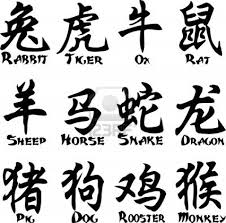
Beginning on a phased basis in September 2014, the new Junior Cycle will feature revised subjects and short courses its main a focus is on literacy, numeracy and key skills together new approaches of assessment and reporting. Schools will have more freedom to design junior cycle programmes that meet the learning needs of all students. For students, the new Junior Cycle will mean that the curriculum available in their schools will be a mix of core subjects and short courses in topics like Art Computing and Chinese.

Courtesy of 123rf.com

The new Junior Certificate will be known as the Junior Cycle Student Award (JCSA).

All in all, when you look back on the many positive achievements, the students, teachers, parents and all stakeholders in the Irish education system have a lot to be grateful to the NCCA who have transformed and are still transforming pre-school, primary and secondary level education in this country.

Thursday, 9 January 2014

New National Economic Plan Published

Happy New Year to all my readers!

Just before Christmas and days after our exit from the EU IMF bailout programme, the Government published its Medium Term Economic Strategy 2014 - 2020.
 

Its purpose is clearly set out 'as the core component of the Government's strategy to continue the work of rebuilding the economy, achieve sustainable economic growth, strong public finances and enduring job creation'.

No one should doubt the need for this new economic plan as a roadmap for Ireland's  future development over the next decade. Yet I have, over the Christmas, read much critical media comment from various economists and other commentators on the content or other aspects of this plan. Nevertheless there are two certain positives to this plan in my mind

 1. That we Do have an National Economic Plan for the future - that is good!

 2. Had we such a Plan a decade ago, Ireland would probably not have indulged in such reckless property speculation that brought our banking sector to its knees and almost bankrupt the country from which we now have a painful recovery - that is even better!

I said this in my Presidential Address 'Building a Sustainable Recovery' in Engineers Ireland in September 2011 (page 15, 'A Year in the Life') and still believe it. In that address I stressed the importance of economic planning and lamented its clear absence in previous decades.

I was greatly impressed therefore when the relatively new Director General Dept of Finance John Moran summoned a major consultative forum on the Medium Term Economic Strategy (MTES) in Dublin Castle on September 24th last to which I was invited. The genesis of the new MTES was at that Forum.
 
At the Forum we explored many diverse but interconnected themes like Ireland, our position in Europe and in the world, nurturing an entrepreneurial culture, the need for increased economic infrastructure and the barriers to its development and building an innovation driven economy.

The medium term economic strategy now published sets out the Government policies and forecasts until 2020 and predicts growth rates of above 2% from 2014, above 3% from 2017 and unemployment falling from present levels of 13.5% to 8% within 6 years. It has the ambitious objective of recovering the 330,000 jobs lost since the recession hit in 2008. It sounds ambitious but perhaps achievable as in 2013 some 58,000 jobs were created and this growth in jobs could accelerate if predicted economic growth happens.
 
Engineering manufacturing in Ireland is also recovering well according to the latest early year statistics. We know already that manufacturing accounts for some 25% of our annual GDP.
 
Following a slow start in early 2013 partly due to the pharma 'out of date patent' cliff, Investec Ireland reported 'a solid finish to 2013 for the manufacturing sector'.

On Jan 2, Investec reported that 'Irish manufacturing activity grew for the seventh month in December and at a faster pace than in November, ending the year on a high note after the country exited an EU/IMF bailout'.

An Taoiseach at the Autumn Panel Discussion with expert speakers
L ro R: Philip O'Doherty, E&I Engineering, Martin McVicar, Combilift, 
Edmond Harty, Dairymaster and Ian Quinn CregannaTactx Medical
This is all very encouraging after our own highlight this year - our Autumn Panel Discussion on Manufacturing in October led by An Taoiseach Enda Kenny TD supported by four of our leading engineering exporting entrepreneurs - Ian Quinn of Creganna, Philip O'Doherty of EI Engineering, Martin McVicar of Combilift and Edmond Harty of Dairymaster.

Patrick Joy of Suretank - Ernst & Young Entrepreneur of the Year

Finally 2013 was a year when another UCD engineering graduate Patrick Joy of Suretank became Ernst & Young Entrepreneur of the Year. Headquartered in Dunleer Co Louth, Suretank Group is the world's largest manufacturer of cargo carrying units for the offshore oil and gas industry. It currently employs 700 people and has revenues of over €68m. Congratulations Patrick!